Clone or Neighbor 3
 That’s Not My Neighbor
 Fnaf 8
 The Visitor
 One Night as Freddy
 Home Alone
 Granny 2
 Survive The Night
 Ultimate Custom Night Plus
 The Backrooms
 Poppy Playtime Chapter 3
 Horror Tale
 FNAF World
 Poppy Playtime Chapter 4
 Five Nights at Freddy's: Security Breach
 The Visitor: Massacre At Camp Happy
 Amanda The Adventurer
 Poppy Playtime 2
 Labubu Horror
 5 Nights of Horror
 SCP-087: Into the Abyss
 Temple Guardians
Not everyone who knocks on doors is human, which is a brutal reality. An impostor could enter if the guard carelessly overlooks a minor detail. Can you distinguish between authentic and fraudulent?
Clone or Neighbor 3: When a single error allows a "Impostor" to enter the structure
Introduction to Clone or Neighbor 3
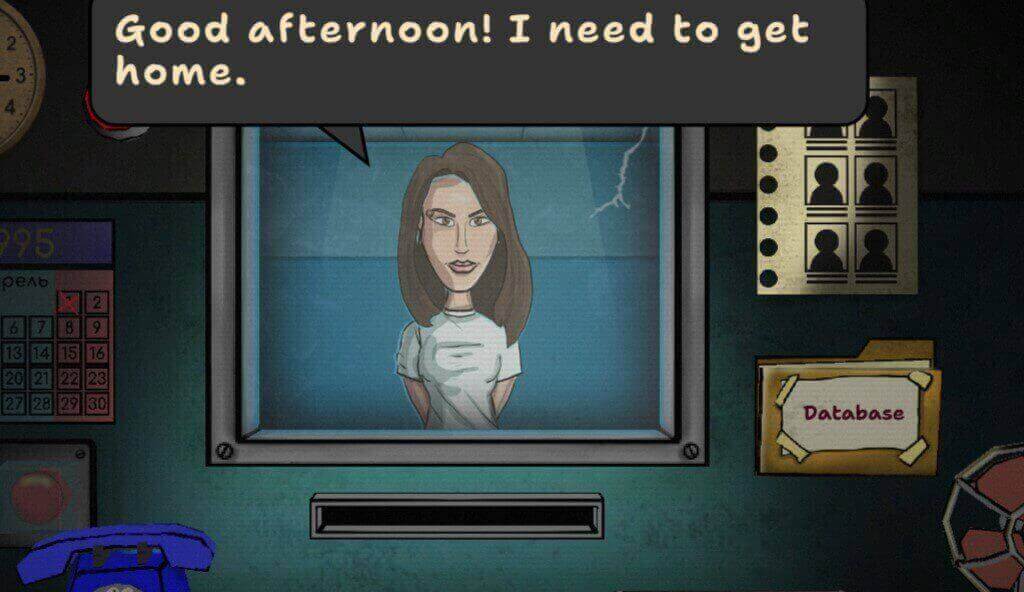
- You work as a doorman at an enigmatic apartment block in Clone or Neighbor 3. Screening residents before allowing them entry seems like a fairly simple task. However, things get complicated when you realise that not everyone is actually human.
The mystery surrounding the imposters in Clone or Neighbor 3
- Beneath the routine task of screening individuals is a mystery backstory regarding the appearance of "clones"—impostors posing as humans. They are gradually infiltrating the apartment complex under your supervision, but nobody knows where they come from. You see people who appear to be true locals on a daily basis, yet you are constantly suspicious of small, odd facts.
- Similar to That's Not My Neighbor, this narrative technique requires players to piece together hints in order to discover the truth because it becomes challenging to distinguish between a real person and an impostor. "Am I protecting humanity... or unwittingly paving the way for something far worse?" is a question you might ask yourself. due to the possibility that these "impostors" are concealing an increasingly enigmatic phenomenon.
Why is Clone or Neighbor 3 so scary?
There is no definite certainty
- There are no simple answers in the game. You may have to rely on minute details like documents, facial features, or aberrant behaviour because the "clones" can resemble actual persons so closely that it is hard to tell them apart with the unaided eye.
Persistent psychological strain when making decisions
- Every inspection necessitates a prompt choice: grant or reject access. There is no margin for error, and as the clones get more complex, the challenge increases.
Sound design that creates tension
- Unsettling noises include footsteps, knocking, and long pauses in between examinations. The game employs subdued sounds in place of a loud soundtrack, giving players the persistent impression that something is "lurking in the shadows".
FNAF-like tension in the air
- Clone or Neighbour 3 has a comparable feeling of pressure to games like FNAF 6, but not having the animatronics present in Five Nights at Freddy's. In a dangerous setting where even a small error can result in instant failure, players must continuously watch, evaluate, and respond.
Beginner's guide to Clone or Neighbor 3
Verify resident details and documentation in detail
Verifying each person's identity documents thoroughly is the first priority. Be mindful of:
- If the name and information match those on the resident list
- Whether the ID's picture accurately depicts their face
- If there are any contradictions or nonsensical information
Pay close attention to people's looks and actions
- In addition to documentation, a resident's behaviour and visual traits are important considerations.
Take your time making a decision
You must a balance between the following factors in Clone or Neighbor 3:
- Completely confirming data.
- Making prompt choices.
Identifying unusual trends
You'll start to spot recurrent indicators of a clone:
- Inconsistent data.
- A face with minor flaws or that is "too perfect".
- Unlike a typical resident's behaviour.
Can you believe what you see?
Players are put in a situation where visual trust is nearly destroyed in Clone or Neighbour 3. Every inhabitant who walks through the door seems normal, with legitimate paperwork and an inconspicuous face, but it's precisely this "excessive normality" that raises red flags. Players are forced to consider if their eyesight is trustworthy or if they are being tricked from the beginning.
Popular Games






 Kiosk
Kiosk  Abandoned Mansion
  Horror Parkour
  House 13: Concierge Simulator
  Exit the Backrooms: Level Fun
  Me Inside: Horror
  Five Nights at Freddy's: 3D Escape
  FNAF: Five Nights in Scary Park
  FNAF: Escape from the Basement
  Five Nights at Fazbear's
  Five Nights at Freddy's Remaster
  Exit the Backrooms: Level 37